Types of Mouth Tape: Full Strips, Vertical Strips, Mouth Tape With a Hole and More
Mouth tape isn’t one product. Some designs seal the lips completely, some barely touch them, and some leave a hole in the middle on purpose. The shape you choose changes how it feels, how well it stays on and how your skin copes. Here is how the main types compare.
Why the shape matters
All mouth tape has the same basic job: keep the lips together so you breathe through your nose. But the types of mouth tape differ in three ways that decide whether you stick with it:
- How much they seal. A full seal blocks mouth breathing completely; partial designs leave room for some air.
- Where the adhesive sits. On the lips, around them, or both. Lips are delicate and peel easily.
- How fast you can get it off. A tab or a small strip comes off in a second.
None of these designs has been compared head to head in a study. The two best-known mouth-taping studies used different products: a porous patch over the lips in 2015 and a silicone hypoallergenic tape in 2022. So the comparison below is practical, not clinical.
The main types compared
| Type | How it works | Pros | Cons | Suits |
|---|---|---|---|---|
| Full horizontal strip | Covers the lips side to side | Firmest hold | Most restrictive, more adhesive on the lips | People whose mouth opens with lighter designs |
| Vertical centre strip | One narrow strip over the middle of the lips | Gentle, corners free, quick to remove | May not hold if the jaw drops a lot | Beginners, anxious tapers |
| Vented (with a hole) | Adhesive around a central opening | Less claustrophobic, some airflow | Allows some mouth breathing | Beginners, mild open-mouth habit |
| Frame design | Sticks to the skin around the lips; the centre gently holds them together | Little or no adhesive on the lips | Larger skin area, harder with facial hair | Sensitive or chapped lips |
| DIY medical tape | Strip cut from porous surgical, micropore or silicone tape | Cheap, easy to find | No tab or shaping, varies in grip | Trying it before buying a product |
Full horizontal strips
A strip across the closed lips gives the most complete seal. If your mouth opens even with tape, this is the design that holds it. The trade-off is that it feels the most sealed in, puts adhesive on the full width of the lips, and can be harder to remove quickly. Always fold a corner into a tab.
Vertical centre strips
A narrow strip running from under the nose to the chin, over the middle of the lips. Houston Methodist suggests this kind of small strip across the middle of the closed lips, because some air can still pass at the sides. It is the most forgiving starting point and the easiest to tear off in a hurry. The weakness is that a strongly dropping jaw can still pull the lips apart.
Mouth tape with a hole (vented designs)
Mouth tape with a hole has an opening in the centre, usually a small oval or slit, with adhesive around it. The idea is to keep the lips mostly together while leaving a small route for air. Many people find this much less claustrophobic.
The flip side: some air can still move through the mouth, so it is a nudge rather than a seal. The 2015 study used a porous oral patch, a breathable patch rather than a sealed strip, and still saw snoring fall in mouth breathers with mild sleep apnea. That doesn’t prove vented designs work as well as full strips, but it shows a full airtight seal isn’t the only option that has been tested.
Frame designs
These stick to the skin around the mouth, with a soft or elastic centre that pulls the lips gently together. Because little or no adhesive touches the lips themselves, they can suit people whose lips crack or peel with regular strips. They cover more skin overall, though, so if the skin around your mouth is reactive, patch test first. With a moustache or beard, the outer edges may not stick well.
DIY medical tape
Plenty of people start with a roll from the pharmacy. The Sleep Foundation recommends porous tape intended for human skin, such as hypoallergenic, surgical or athletic tape, and warns that masking tape and other non-body tapes are more likely to irritate. Houston Methodist calls hypoallergenic micropore tape the safest household option and warns against non-porous tapes like duct tape. Cut a short strip, round the corners and fold a tab. Our guide to regular tape for mouth taping compares the rolls you are likely to find.
Not tape at all: chin straps and mouth shields
For a mouth that falls open during sleep, the NHS lists a chin strap or a vestibular shield (a small device worn inside the lips) as options. They work differently from tape and avoid adhesive altogether. See mouth tape vs chin strap for that comparison.
How to choose
- New to taping or a bit anxious? Start with a vertical strip or a vented design.
- Mouth still opens? Move up to a horizontal strip.
- Sore or peeling lips? Try a frame design that keeps adhesive off the lips.
- Reactive skin? Look at the adhesive before the shape; see mouth tape for sensitive skin.
- Every type: make sure you can pull it off in one second. Application tips are in how to mouth tape.
Not just tape.
A mouth band that understands your night.
Every tape shape answers the same question, how to keep the mouth closed, and none answers the next one: did it change your night? Zzip is being designed as a shaped silicone mouth band with a skin-friendly adhesive and built-in sensors for breathing and snoring.
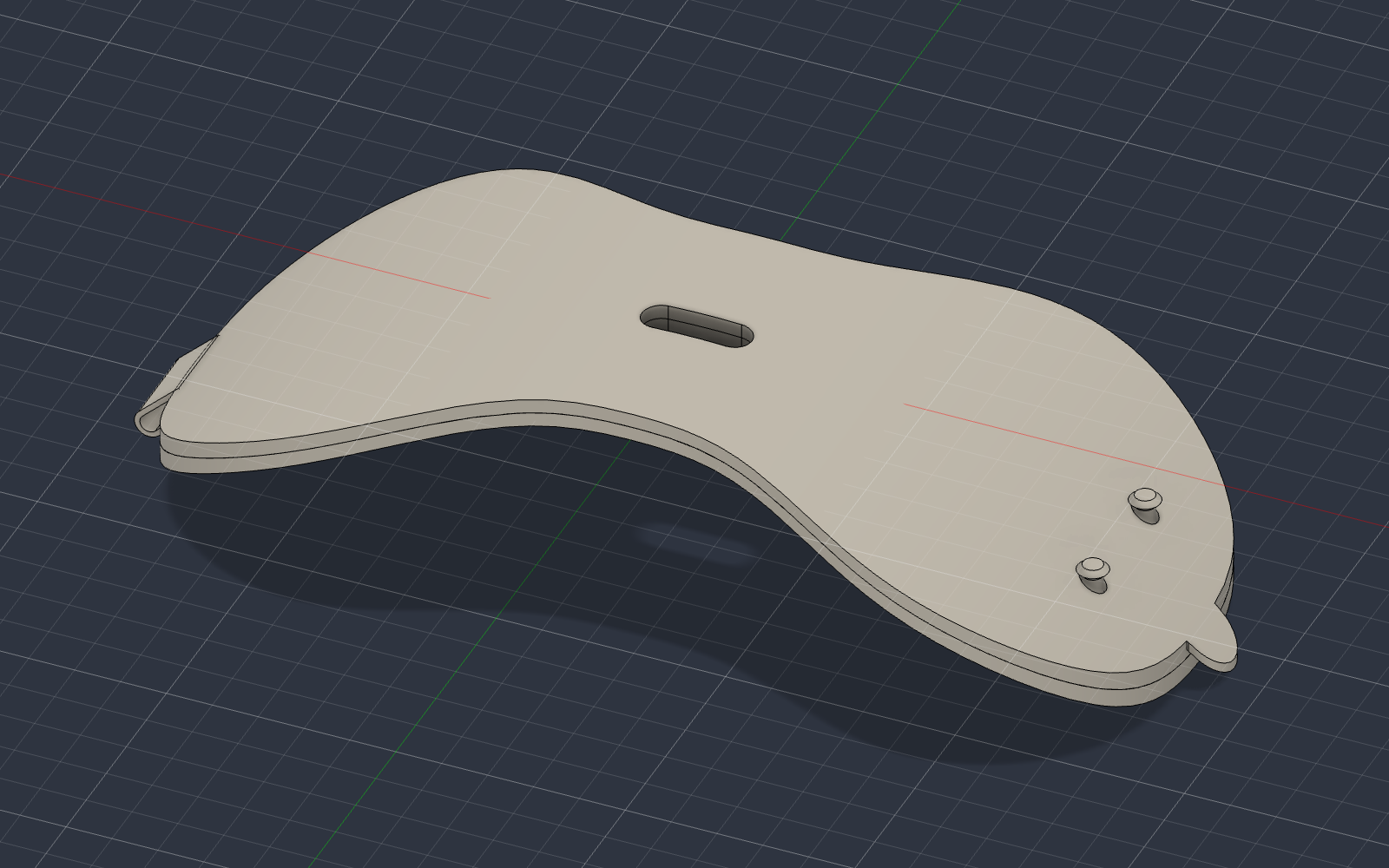
| Regular mouth tape | Zzip | |
|---|---|---|
| Keeps your mouth closed | ✓ | ✓ |
| Measures your breathing | — | ✓ |
| Detects snoring | — | ✓ |
| Responds to snoring | — | ✓ |
| Smart wake-up window | — | ✓ |
| Shows you the results | — | ✓ |
- Keeps your mouth closed, comfortablyA flexible silicone body with an integrated, skin-friendly adhesive, shaped around the mouth.
- Follows every breathA thermistor near the nose counts each breathing cycle directly from the warm and cool air of your breath.
- Hears snoring and respondsA microphone detects snoring; a gentle vibration is designed to encourage you to change position without waking you.
- Wakes you at a better momentA smart alarm looks for a suitable moment in the window before your alarm time.
- Your whole night on one screenOptical pulse and SpO₂ signals, movement and temperature come together in the Zzip app.
If you are curious about mouth taping, Zzip is worth following: it is the version that shows you whether it actually works for you.
Zzip is a prototype in development. Features and measurement performance are being tested. It is not a medical device and does not diagnose or treat sleep apnea or any other condition.
Frequently asked questions
What is mouth tape with a hole for?
The opening leaves a small path for air while keeping the lips mostly together. It feels less claustrophobic, which helps beginners, but it doesn’t block mouth breathing completely.
Is full mouth tape or a vertical strip better?
Neither is better for everyone. Start with the lightest design that keeps your lips together. Move to a full strip only if your mouth still opens.
Does mouth tape need to cover the whole mouth?
No. A small strip over the middle of the lips is often enough, and some air at the corners can make it feel more comfortable.
Can I use medical tape instead of mouth tape?
Many people do. Choose porous, hypoallergenic tape made for skin, cut a small strip and fold a tab. Avoid office, masking, packing and duct tape.
Which type of mouth tape is best for sensitive lips?
A frame design that keeps adhesive off the lips, or a narrow vertical strip with a gentle adhesive such as silicone.
Sources
- Huang TW, Young TH (2015). Novel porous oral patches for patients with mild obstructive sleep apnea and mouth breathing: a pilot study. Otolaryngology–Head and Neck Surgery 152(2):369-73.
- Lee YC, Lu CT, Cheng WN, Li HY (2022). The Impact of Mouth-Taping in Mouth-Breathers with Mild Obstructive Sleep Apnea: A Preliminary Study. Healthcare (Basel) 10(9):1755.
- Houston Methodist (2025). Can Mouth Tape During Sleep Be Dangerous? On Health.
- Sleep Foundation (2026). Mouth Taping for Sleep: Does It Work?
- NHS. Snoring.
This article is for general information only and is not medical advice. If you have symptoms of a sleep or breathing disorder, talk to a qualified healthcare professional.