CAD REFERENCE
Curved form
The R80 curved V6 body is a ready CAD reference; on the electronics side, the sensor, processor, power and memory architecture is defined. Development continues so the sensors and battery can work together inside this form.
From your breath to your movement, discover the rhythm of your night.
Multiple sensors, active snoring tracking and a smart alarm.
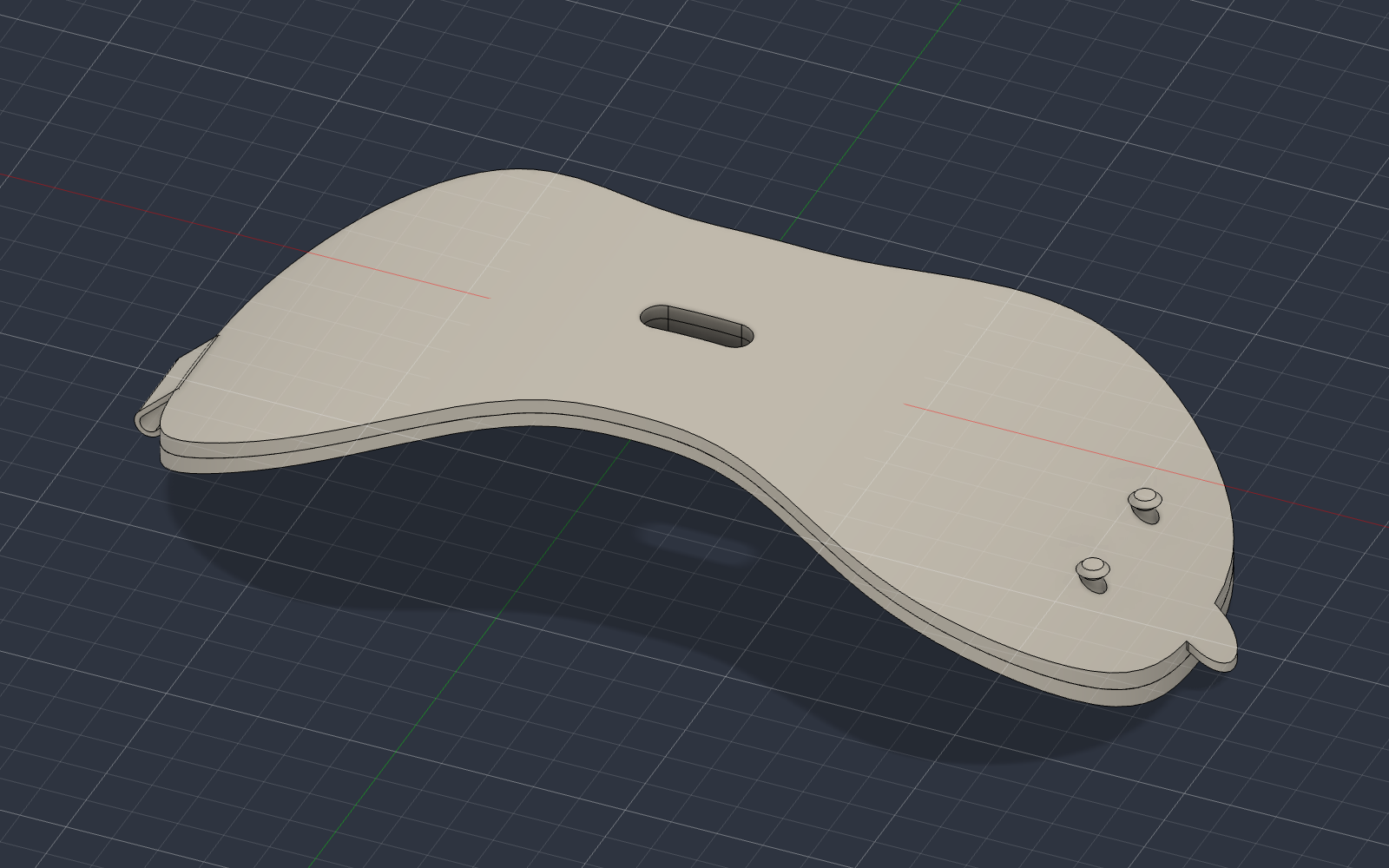 ZZIP / V6 R80 / CAD PROTOTYPE
Life is complicated enough. The things that accompany you don’t have to be. Zzip is being developed to bring its custom PCB and sensors together in the curved form of V6.
Flexible TPU body. Softened lines.
Designed with the feel of contact in mind.
Integrated hinge and two snaps.
A simpler experience with fewer parts.
Built-in PCB, sensors and Bluetooth.
One whole with the Zzip app.
We’re working on the optical section.
The R80 curved V6 body is a ready CAD reference; on the electronics side, the sensor, processor, power and memory architecture is defined. Development continues so the sensors and battery can work together inside this form.
The depth of the contact area and the sensor position are still being refined; pulse and SpO₂ measurement performance will be validated with physical tests.
Internal volume, optical contact and assembly tolerances are being evaluated together. CAD fit does not mean measurement performance has been validated in the final product.
Choose a feature. Compare three approaches.
Counting from the thermal cycle of breathing
The vibration motor is not included in the current design.
The EEG circuit is not included in the current design.
In development
In development
Zzip and Pro are in development; these features do not represent validated product performance.
Zzip columns show planned features. Snoring reduction, moving you without waking you, and measurement performance have not been validated yet.
Other devices do not all share the same features as a single product group.
E.g. Oura: derived from PPG¹
Oura’s breath measurement methodDiscover another rhythm of the night with a tap.
Optical signals for estimating pulse and blood oxygen saturation. Contact and measurement quality will be validated with physical tests.
ILLUSTRATIVE SIGNAL · NOT A LIVE READINGTracking the breathing cycle and rate from the temperature changes that occur as you inhale and exhale.
ILLUSTRATIVE SIGNAL · NOT A LIVE READINGOn-device processing aimed at telling snoring events apart from night sounds.
ILLUSTRATIVE SIGNAL · NOT A LIVE READINGNight movements, turning events and changes in head orientation.
ILLUSTRATIVE SIGNAL · NOT A LIVE READINGA separate measurement channel for tracking temperature changes at the skin contact point.
ILLUSTRATIVE SIGNAL · NOT A LIVE READINGBattery, charge status and recording information; transfer to the app over Bluetooth.
ILLUSTRATIVE SIGNAL · NOT A LIVE READINGA custom PCB inside the mouth band, with sensors that complement one another. Zzip is being developed to turn the signals produced overnight into a clear morning summary.
Measurement goals are in development. Final accuracy and usage performance have not been validated yet.
Zzip is being designed to turn sensor data into a meaningful response: gentle movement support through the night, and a wake-up moment that suits you in the morning.
Zzip aims to detect snoring events with its microphone and encourage a change of position with gentle vibrations. The goal is to support movement without waking you and help reduce snoring.
The motion sensor tracks whether you turn after a vibration. In the app, snoring, vibration and turning events can be viewed together.
A vibration motor is not part of the current design. The effect on not waking you and on reducing snoring has not been validated yet.If no suitable moment is found, the target time applies.
By evaluating movement, breathing and other available sensor data together, the aim is to find a suitable wake-up moment within the window before your chosen alarm.
Design goal: if no suitable moment is found or there isn’t enough data, fall back to the alarm time you set.
Good morning.
Connect over Bluetooth. Review your night recordings. Track pulse, SpO₂, breathing, movement and snoring in one app.
The Pro model adds EEG to the multi-sensor architecture. With an electrode extension coming out of each side of the body, the goal is to analyze signals related to the brain’s electrical activity.
PPG, breathing thermistor, microphone, motion and temperature sensors. Active snoring response and sensor-based alarm goals.
In addition to Zzip’s sensors, one EEG electrode extension from each side and a brain signal analysis goal. The plan is to evaluate EEG data together with the other night signals.
The EEG circuit is not part of the current design. Two electrode extensions do not mean two validated independent EEG channels. The reference, contact quality, electronic front end and analysis methods will be developed; there is no claim of validated sleep staging or diagnosis.
Sometimes the space you make for yourself
starts with something tiny.
Drag to rotate. Pinch to zoom.
Closed shell view of the V6 CAD model. The hinge and electronics placement are not shown.
An electronic system inside two shells. The body, PCB, sensors and battery are being developed together.
Thinness, low weight and adapting to facial movement: we approach Zzip’s hardware with these three goals together.
A thin, flexible board approach that follows the curve of the body has been adopted. Component placement and real bending behavior will be validated with physical tests.
Placing the battery and electronics side by side reduces stacked thickness. The cell is kept away from the areas that flex.
Rounded edges, a flexible outer body and sensor contact areas are being developed together. Skin compatibility and all-night comfort will be evaluated with physical tests.
Choosing a high-quality, skin-friendly adhesive for placement around the mouth and balanced hold is one of the core goals of the design. We consider reliable hold, gentle removal and sensor contact together.
Join Zzip’s journey from the very beginning.