How Do Sleep Trackers Work? Sensors, Algorithms and Accuracy
Your watch says you slept 6 hours 42 minutes with 1 hour 18 minutes of deep sleep. How could it know? Here is what sleep trackers actually measure, how they turn that into a sleep score, how accurate they are compared with a lab sleep study, and how to use the numbers without being misled by them.
What a lab sleep study measures
To understand trackers, start with the reference they are judged against. In a sleep lab, polysomnography records many signals at once. According to Cleveland Clinic, these include brain activity (EEG), eye movements (EOG), muscle activity (EMG), heart rhythm (ECG), airflow at the nose and mouth, chest and belly breathing effort, blood oxygen from a finger sensor, plus video and audio.
Sleep stages are defined by brain waves and eye movements. Light sleep, deep sleep and REM sleep look different on an EEG. That is the key point: a technologist scoring a sleep study is looking at the brain itself. A consumer tracker is not.
How do sleep trackers work?
Consumer devices collect indirect signals that change with sleep, then let software infer the rest. A 2019 review of wearable sleep technology describes devices that capture heart rate and its variability, skin conductance and temperature in addition to activity.
| Sensor | What it picks up | Used to estimate |
|---|---|---|
| Accelerometer | Movement | Asleep vs awake, restlessness |
| Optical sensor (PPG) | Blood volume changes under the skin | Heart rate, heart rate variability, sleep stages |
| Red and infrared light | Colour of the blood | Blood oxygen trends (SpO₂) |
| Temperature sensor | Skin temperature | Night-to-night changes |
| Microphone | Sound | Snoring, some breathing patterns |
| Radar or sonar (bedside) | Tiny chest movements | Breathing rate, movement |
Step 1: movement
The oldest method is actigraphy: if your wrist is still for long enough, you are probably asleep. It works well for total sleep time in healthy sleepers, but lying still while awake fools it.
Step 2: the heart
Modern trackers add an optical sensor that shines light into the skin and reads the pulse. Heart rate tends to drop and become steadier in deep sleep, and to become more variable in REM. These patterns help the algorithm separate stages.
Step 3: the algorithm
Manufacturers train their algorithms on people who wore the device during a lab sleep study, so the software learns which combinations of movement and heart signals usually line up with each stage. The algorithms are proprietary, and they change with firmware updates, which the 2019 review flags as a challenge for researchers.
Sleep tracker accuracy: what the research shows
When researchers test sleep tracker accuracy, they compare every 30-second slice of the night with the lab result. Two terms matter: sensitivity (how often the device correctly says “asleep” when you are asleep) and specificity (how often it correctly says “awake” when you are awake).
- A 2021 study tested seven consumer devices on 34 healthy young adults over three nights in a sleep lab. Sensitivity was high for all of them (at least 93%), but specificity was low to medium, from 18% to 54%. Sleep stage results were mixed, and devices did worse on nights when sleep was deliberately disrupted.
- A 2025 study tested six wrist-worn devices on 62 adults. All detected more than 90% of sleep, but specificity ranged from about 29% to 52%. Agreement on sleep stages was fair to moderate, and most devices differed from the lab on total sleep time, time awake after falling asleep and light sleep.
The pattern is consistent: trackers are good at recognizing sleep, and tend to count quiet time awake as sleep. That means they may flatter a restless night, which matters most for people with insomnia.
What sleep trackers cannot do
- Read your brain. Without EEG, sleep stages are estimates.
- Measure airflow. Wrist and finger devices do not sense air moving through your nose or mouth, so they cannot tell nasal from mouth breathing or directly detect a blocked airway.
- Diagnose. The American Academy of Sleep Medicine’s position is that consumer sleep technology cannot be used to diagnose or treat sleep disorders. It can be useful to start a conversation with a clinician.
Some trackers report blood oxygen and breathing rate overnight. Those numbers can be useful trends, but read our guides on blood oxygen levels during sleep and breathing rate during sleep before you worry about a single value.
Different form factors, same basic idea
Watches, rings, bed sensors, bedside radar devices, phone apps and face-worn bands all follow the same recipe: measure what they can reach, infer the rest. Where the sensor sits changes what it can see. A ring or watch reads the pulse; a phone on the nightstand hears sound; a bed sensor feels movement and breathing through the mattress. Our comparison of a sleep tracker ring vs watch goes into the trade-offs.
How to use a sleep tracker without being misled
- Watch trends, not nights. A week-long average is far more reliable than one night’s deep sleep figure.
- Stick with one device so changes reflect you, not a different algorithm.
- Add context. Note alcohol, late meals, stress and travel. The story is in the pattern.
- Trust how you feel. If you wake refreshed, a low score is not a problem. If you are exhausted, a good score does not rule one out.
- Do not chase the score. Sleep researchers use the term orthosomnia for the anxiety some people develop from trying to perfect their tracker data.
Not just tape.
A mouth band that understands your night.
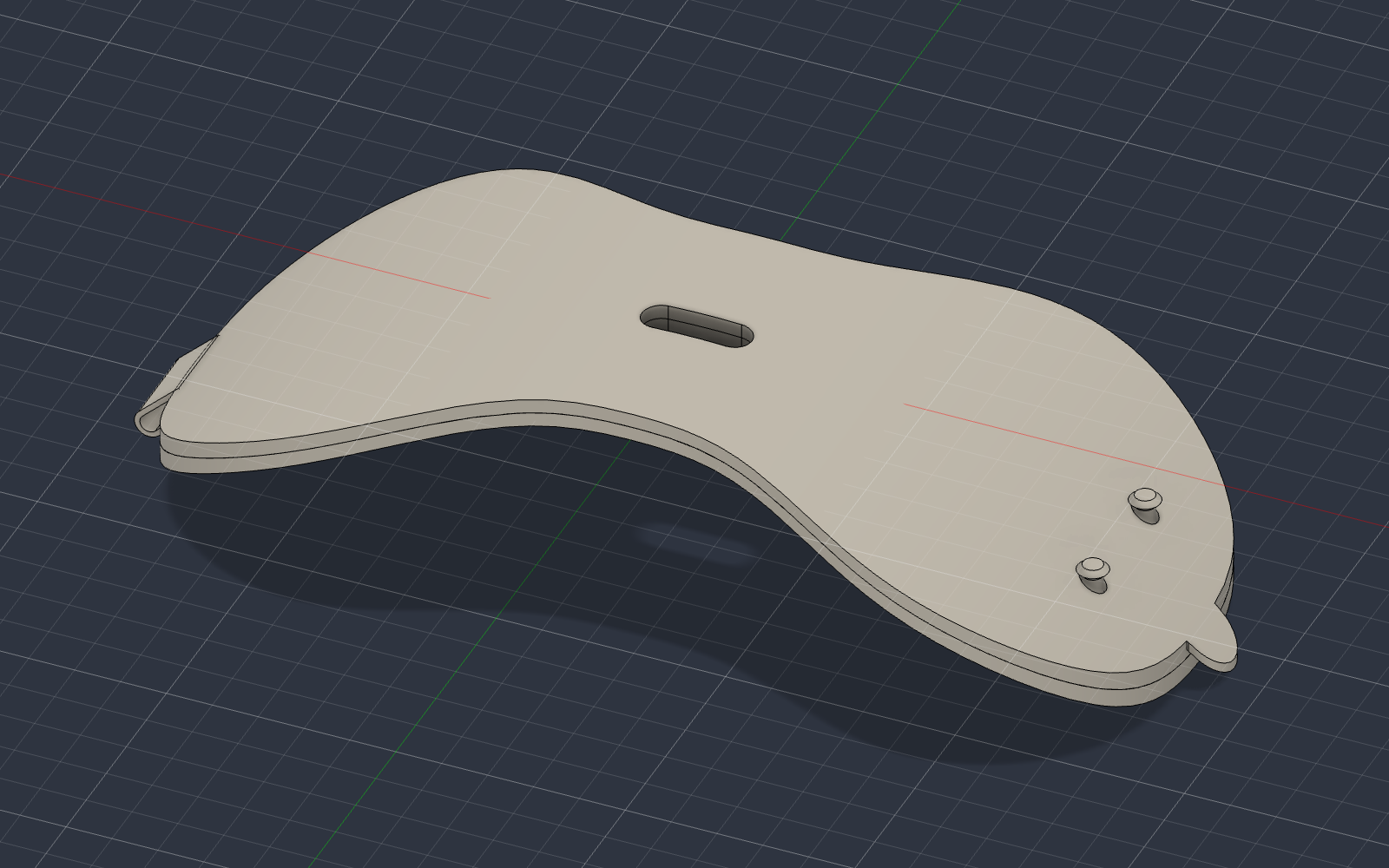
Wrist and finger trackers have to guess at your breathing from your pulse. Zzip is being developed to measure it where it happens: a breathing sensor at the nose and a microphone at the mouth, designed to follow each breath and catch snoring and mouth breathing that other trackers cannot see.
| Regular mouth tape | Zzip | |
|---|---|---|
| Keeps your mouth closed | ✓ | ✓ |
| Measures your breathing | — | ✓ |
| Detects snoring | — | ✓ |
| Responds to snoring | — | ✓ |
| Smart wake-up window | — | ✓ |
| Shows you the results | — | ✓ |
- Keeps your mouth closed, comfortablyA flexible silicone body with an integrated, skin-friendly adhesive, shaped around the mouth.
- Follows every breathA thermistor near the nose counts each breathing cycle directly from the warm and cool air of your breath.
- Hears snoring and respondsA microphone detects snoring; a gentle vibration is designed to encourage you to change position without waking you.
- Wakes you at a better momentA smart alarm looks for a suitable moment in the window before your alarm time.
- Your whole night on one screenOptical pulse and SpO₂ signals, movement and temperature come together in the Zzip app.
If you are curious about mouth taping, Zzip is worth following: it is the version that shows you whether it actually works for you.
Zzip is a prototype in development. Features and measurement performance are being tested. It is not a medical device and does not diagnose or treat sleep apnea or any other condition.
Frequently asked questions
How accurate are sleep trackers?
For total sleep in healthy adults, reasonably good. In lab studies most devices detected over 90% of sleep, but they often miss time awake in bed, and agreement on sleep stages is only fair to moderate.
How do sleep trackers know when you are in deep sleep?
They do not know directly. They estimate it from patterns in movement, heart rate and heart rate variability that tend to occur in deep sleep, using algorithms trained against lab sleep studies.
Can a sleep tracker detect sleep apnea?
Some can flag patterns such as oxygen dips that may be worth discussing with a doctor, but consumer trackers are not a diagnosis. Sleep apnea is diagnosed with a lab sleep study or a home sleep apnea test.
Is a sleep tracker better than how I feel?
No. How rested you feel during the day is still one of the most meaningful measures. Use tracker data alongside that, not instead of it.
Do sleep trackers work without a watch or ring?
Yes. Bed sensors, bedside radar devices and phone apps can estimate sleep from movement, breathing and sound, each with its own strengths and limits.
Sources
- Chinoy ED, Cuellar JA, Huwa KE et al. (2021). Performance of seven consumer sleep-tracking devices compared with polysomnography. Sleep 44(5):zsaa291.
- Schyvens AM, Peters B, Van Oost NC et al. (2025). A performance validation of six commercial wrist-worn wearable sleep-tracking devices for sleep stage scoring compared to polysomnography. Sleep Advances 6:zpaf021.
- Khosla S, Deak MC, Gault D et al. (2018). Consumer Sleep Technology: An American Academy of Sleep Medicine Position Statement. Journal of Clinical Sleep Medicine 14(5):877–880.
- de Zambotti M, Cellini N, Goldstone A, Colrain IM, Baker FC (2019). Wearable Sleep Technology in Clinical and Research Settings. Medicine & Science in Sports & Exercise 51(7):1538–1557.
- Cleveland Clinic. Sleep Study (Polysomnography).
This article is for general information only and is not medical advice. If you have symptoms of a sleep or breathing disorder, talk to a qualified healthcare professional.