Snoring vs Sleep Apnea: How to Tell the Difference
Almost everyone with sleep apnea snores, but most people who snore do not have sleep apnea. Telling them apart matters, because one is mostly a noise problem and the other is a medical condition. Here are the signs that separate them and the only way to know for sure.
What is the difference between snoring and sleep apnea?
Both start in the same place: during sleep the muscles of the throat relax and the airway narrows.
Snoring happens when the airway narrows enough for the air to become turbulent and make soft tissue vibrate. Air still flows. Cleveland Clinic describes occasional, so-called primary snoring as common and usually harmless.
Obstructive sleep apnea happens when the airway narrows so much that it closes completely (an apnea) or partly (a hypopnea) for ten seconds or more, again and again through the night. Oxygen levels can drop, and the brain briefly wakes you to reopen the airway, usually without you remembering it. The NHLBI describes sleep apnea as breathing that stops and restarts many times during sleep, and notes that untreated sleep apnea is linked to a higher risk of stroke, heart attack and other serious problems.
So the key question in snoring vs sleep apnea is not how loud you are. It is whether your breathing is being interrupted.
Snoring vs sleep apnea side by side
| Simple snoring | Obstructive sleep apnea | |
|---|---|---|
| What happens | Airway narrows, tissue vibrates, air keeps flowing | Airway repeatedly closes or nearly closes, breathing pauses |
| Sound pattern | Steady, rhythmic snoring | Snoring broken by silences, then a gasp, snort or choke |
| Oxygen | Usually normal | Can drop during events |
| Sleep quality | Usually unaffected for the snorer | Fragmented by many brief awakenings |
| Daytime | Feels normal | Sleepy, unrefreshed, morning headaches, poor focus |
| Health risk | Mainly a nuisance, especially for a bed partner | Linked to high blood pressure, heart disease and stroke |
| Who decides | You, with lifestyle changes | A doctor, after a sleep study |
Warning signs that point to sleep apnea
None of these proves you have sleep apnea, but each one is a reason to get checked:
- Someone has seen you stop breathing, or heard long silences in your snoring followed by a gasp or choke.
- You wake up gasping or with a racing heart.
- You are sleepy during the day even after a full night, or you nod off while reading, watching TV or, most worryingly, driving.
- You wake with headaches, a dry mouth or a sore throat.
- You have high blood pressure, especially if it is hard to control.
- Your snoring is loud and nightly, and does not improve with side sleeping or avoiding alcohol.
Women and children often show different patterns. See snoring in women and snoring in children, and for a complete list of signs, sleep apnea symptoms.
The STOP-Bang questions: a quick risk check
Doctors often use a short questionnaire called STOP-Bang to estimate the risk of obstructive sleep apnea. Each “yes” scores one point:
- Snoring: do you snore loudly enough to bother a bed partner?
- Tiredness: do you often feel tired or sleepy during the day?
- Observed: has anyone seen you stop breathing or gasp during sleep?
- Pressure: do you have high blood pressure?
- BMI: is your body mass index over 35?
- Age: are you over 50?
- Neck: is your neck circumference over 16 inches (about 40 cm)?
- Gender: are you male?
According to the Sleep Foundation’s summary, a score of 0 to 2 suggests low risk, 3 to 4 intermediate risk and 5 to 8 high risk of moderate to severe OSA. It is a screening tool only. It can flag people who do not have sleep apnea, and because one point is for being male, it can underestimate risk in women. If you score 3 or more, or have any of the warning signs above, it is worth discussing with a doctor.
How sleep apnea is diagnosed
The American Academy of Sleep Medicine’s guideline is clear that questionnaires and prediction tools should not be used on their own to diagnose OSA in adults. Diagnosis needs a sleep test:
- In-lab polysomnography is the standard test. You sleep overnight in a sleep centre while sensors record brain activity, breathing, oxygen, heart rate and movement.
- Home sleep apnea testing uses a simpler device you wear in your own bed. The guideline supports it for uncomplicated adults with signs of moderate to severe OSA. If a home test is negative or unclear but suspicion remains, a lab study should follow.
The result is usually given as an apnea-hypopnea index (AHI), the number of breathing events per hour of sleep. For adults, the Sleep Foundation lists under 5 as normal, 5 to under 15 as mild, 15 to under 30 as moderate and 30 or more as severe. Doctors also consider oxygen levels and symptoms, not just the number.
What this means for snoring fixes
If you have simple snoring, lifestyle changes and simple devices are reasonable to try. Our guide on how to stop snoring covers them. If you might have sleep apnea, get assessed first. Treatments such as nasal strips or mouth tape can make snoring quieter without fixing the breathing pauses, which may hide the very symptom that would get you diagnosed. Sleep apnea itself is treatable, most often with CPAP, oral appliances, weight loss or surgery, depending on the cause and severity.
Not just tape.
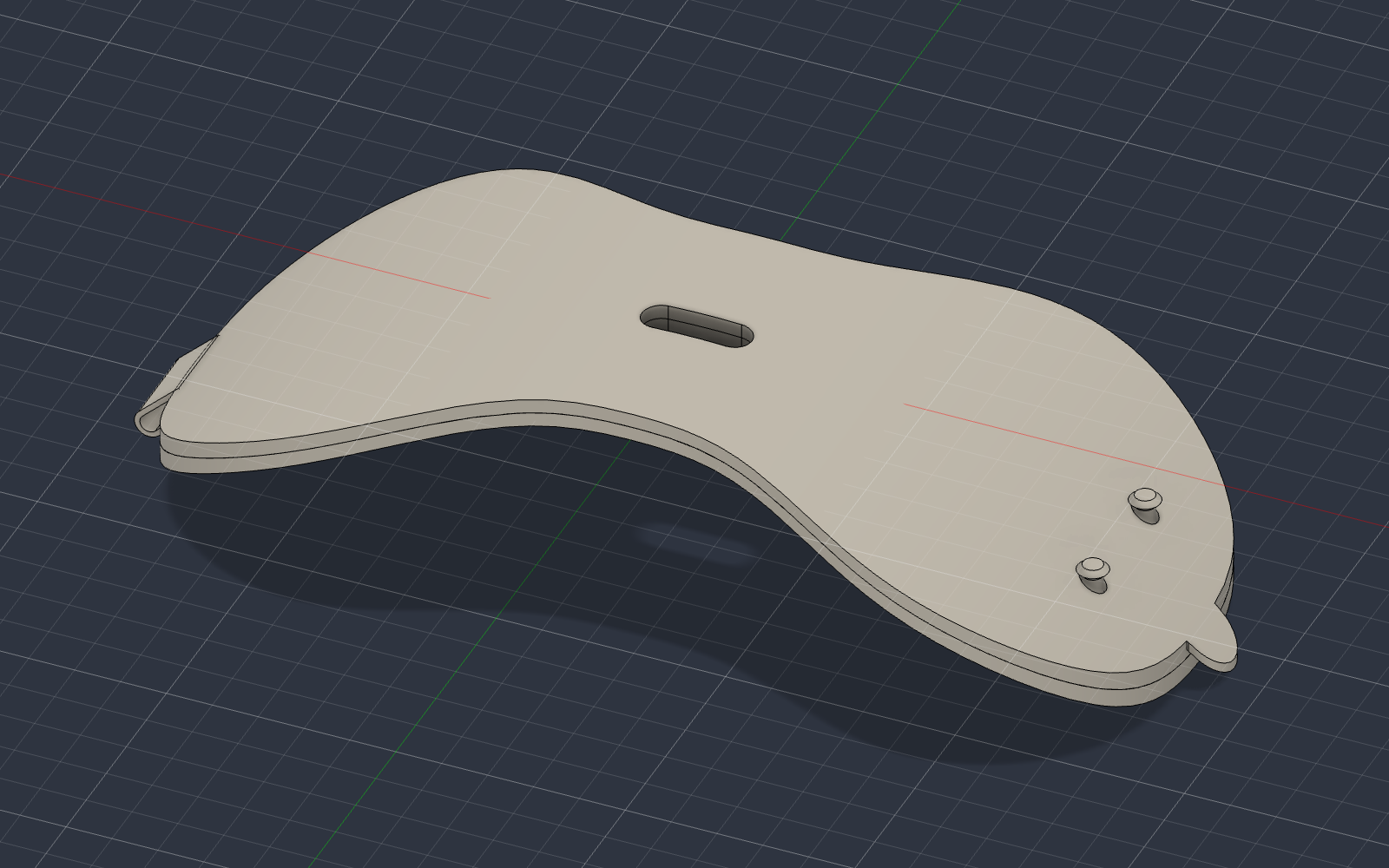
A mouth band that understands your night.
The difference between snoring and sleep apnea is what happens between the snores, and that part is easy to miss. Zzip is being designed to record snoring together with breathing and SpO₂ trends overnight. It is not a medical device and cannot diagnose sleep apnea, but it is meant to help you notice when it is time to ask a doctor.
| Regular mouth tape | Zzip | |
|---|---|---|
| Keeps your mouth closed | ✓ | ✓ |
| Measures your breathing | — | ✓ |
| Detects snoring | — | ✓ |
| Responds to snoring | — | ✓ |
| Smart wake-up window | — | ✓ |
| Shows you the results | — | ✓ |
- Keeps your mouth closed, comfortablyA flexible silicone body with an integrated, skin-friendly adhesive, shaped around the mouth.
- Follows every breathA thermistor near the nose counts each breathing cycle directly from the warm and cool air of your breath.
- Hears snoring and respondsA microphone detects snoring; a gentle vibration is designed to encourage you to change position without waking you.
- Wakes you at a better momentA smart alarm looks for a suitable moment in the window before your alarm time.
- Your whole night on one screenOptical pulse and SpO₂ signals, movement and temperature come together in the Zzip app.
If you are curious about mouth taping, Zzip is worth following: it is the version that shows you whether it actually works for you.
Zzip is a prototype in development. Features and measurement performance are being tested. It is not a medical device and does not diagnose or treat sleep apnea or any other condition.
Frequently asked questions
Can you have sleep apnea without snoring?
It is possible. Snoring is the most common symptom, but it is not a requirement, so daytime sleepiness and observed pauses are important clues too. There is also central sleep apnea, a less common type in which the brain does not send the signal to breathe, which is a different problem from a narrowed airway.
Does loud snoring mean sleep apnea?
Not necessarily. Loud snoring raises the likelihood, especially with pauses, gasping or daytime sleepiness, but only a sleep study can tell.
How do I know if I stop breathing in my sleep?
Usually someone else notices. You can also record audio overnight and listen for long silences followed by gasps. A recording can help your doctor decide on testing, but it cannot diagnose you.
Is a home sleep test accurate?
Home sleep apnea tests are accepted for many uncomplicated adults with a high likelihood of moderate to severe OSA. They can miss milder cases, so a negative home test with ongoing symptoms should be followed by a lab study.
Can snoring turn into sleep apnea?
Snoring and sleep apnea sit on the same spectrum of airway narrowing. Weight gain, ageing and other changes can make the airway more collapsible over time, so it is worth rechecking if new symptoms appear.
Sources
- National Heart, Lung, and Blood Institute (NHLBI). Sleep Apnea: What Is Sleep Apnea?
- Cleveland Clinic. Snoring: Causes & Complications.
- Sleep Foundation. STOP-Bang Score: Understanding Your Sleep Apnea Risk.
- Sleep Foundation. Apnea-Hypopnea Index (AHI).
- Kapur VK, Auckley DH, Chowdhuri S, et al. (2017). Clinical Practice Guideline for Diagnostic Testing for Adult Obstructive Sleep Apnea: An American Academy of Sleep Medicine Clinical Practice Guideline. Journal of Clinical Sleep Medicine 13(3):479–504.
This article is for general information only and is not medical advice. If you have symptoms of a sleep or breathing disorder, talk to a qualified healthcare professional.